Lesson 1
Heat and touch
Start with spoons, handles, and boiling water. Use sensory experience to distinguish temperature from heat transfer.
Teacher Guide
This guide turns the website into a classroom tool. It offers lesson progression, discussion prompts, simple activities, and print-friendly cards that can be used in a class, club, outreach event, or informal learning setting.
Suggested sequence
Lesson 1
Start with spoons, handles, and boiling water. Use sensory experience to distinguish temperature from heat transfer.
Lesson 2
Ask why objects are made from specific materials and what properties those choices optimize.
Lesson 3
Use bulbs, cooktops, and lighting to connect current, resistance, heating, wavelength, and color.
Lesson 4
Use kitchen acoustics and a faucet to introduce wave behavior, pressure gradients, and the idea that flow follows resistance.
Discussion prompts
Use this prompt to expose the difference between sensation and thermal measurement.
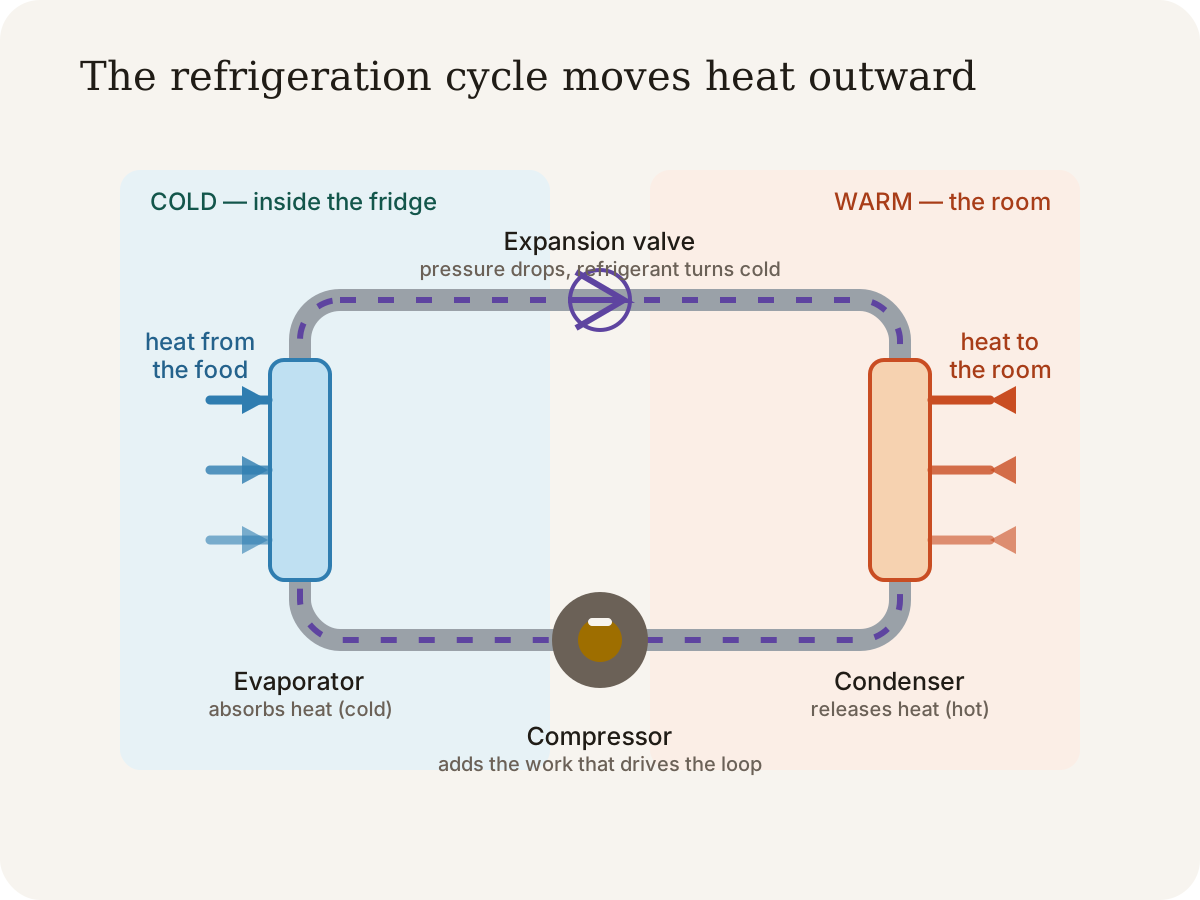
Use it to fight the misconception that cold is a "thing" being produced.
Use this to introduce reflection, absorption, and wave behavior without equations first.
Activity cards
Goal: Compare materials by touch and explain why equal temperatures can feel different.
Prompt: Which spoon feels colder? Why?
Goal: Observe condensation on a cool plate and identify the energy change behind it.
Prompt: Where did the droplets come from, and what happened to the vapor?
Goal: Compare sound in different parts of the kitchen or classroom.
Prompt: Which surfaces reflect more sound and which soften it?
Printable worksheets
Students distinguish temperature from heat, explain condensation, and reason about thermos bottles and refrigerators.
Students compare metals, polymers, and ceramics using concrete kitchen objects and design tradeoffs.
Students reason about energy conversion in bulbs and appliances, the visible spectrum, and what induction heating actually heats.
Students connect acoustic reflection, faucet flow, and pressure to wavelength, waves, and resistance.
How to use the site