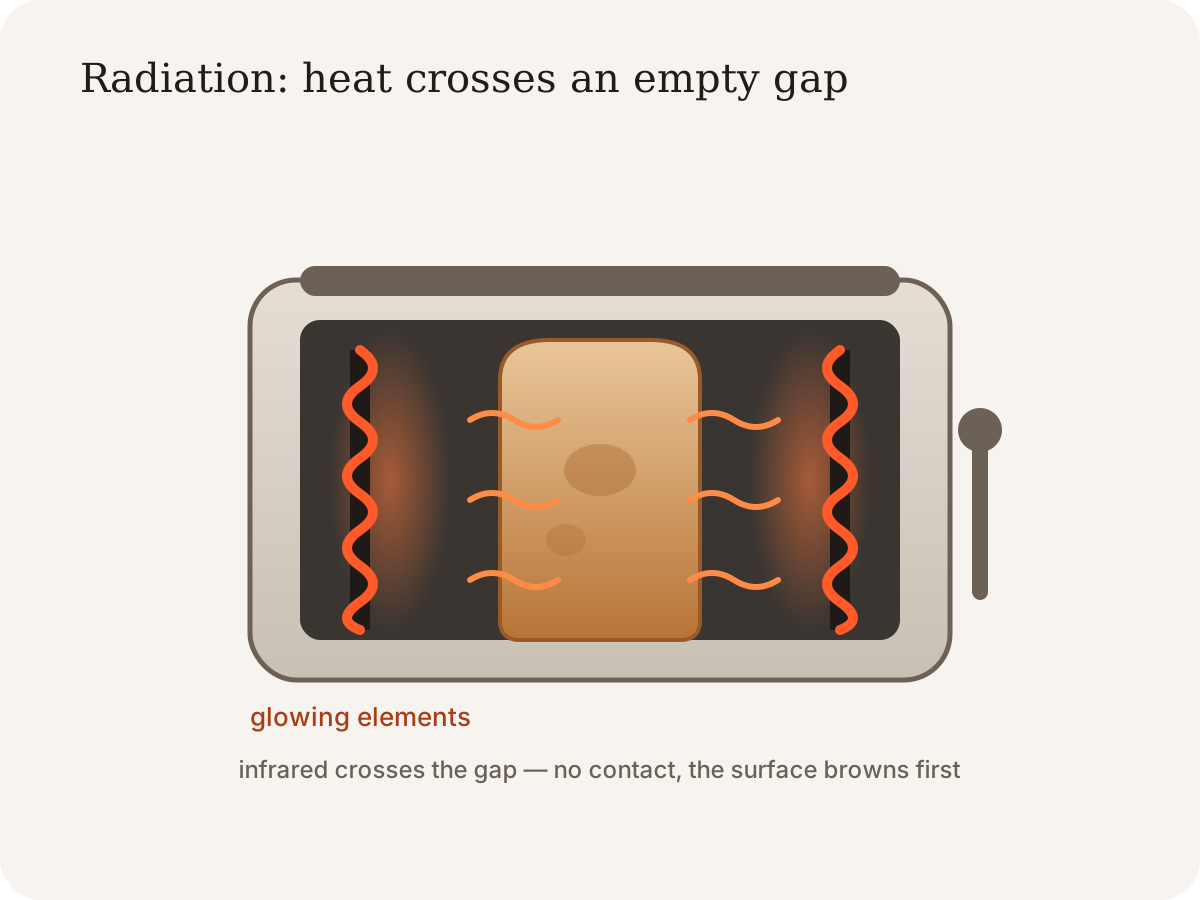
It is tempting to think the slots fill with hot air that cooks the bread, like a tiny
oven. But convection plays a minor role: the dominant transfer is radiation, which
needs no medium at all. The proof is on the slice itself — browning appears exactly
on the faces with a line of sight to the elements, and the shadowed edges stay pale.
Radiation is the same mechanism that lets the Sun warm the Earth across 150 million kilometres of vacuum. Your toaster demonstrates it at breakfast, across three centimetres of air.
The pop-up mechanism is applied physics too. Classic toasters used a bimetallic strip
— two bonded metals that expand at different rates, bending as they warm until they
release the latch. Modern ones use an electronic timer, but the ending is the same:
a spring, suddenly free, converts its stored elastic energy into the familiar jump.