Explore object

Thermos

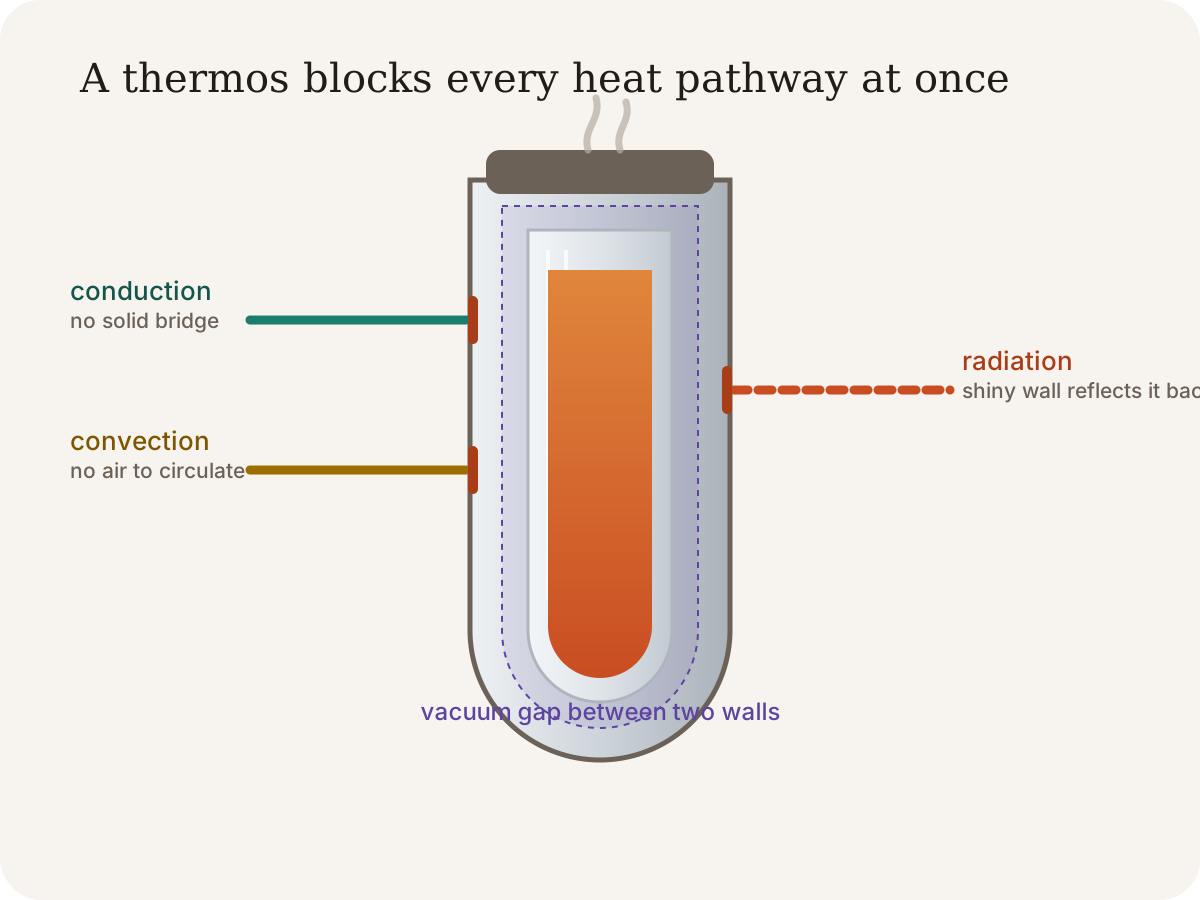
A thermos works by eliminating — not just reducing — all three mechanisms of heat transfer. It is one of the most elegant pieces of physics-informed engineering in everyday life.

Thermos insulation cross-section illustration

What to notice

Three design features target three different heat pathways.

Feature 1

A vacuum gap eliminates conduction and convection

The double-walled construction encloses a near-vacuum between the walls. With no matter present, neither conduction nor convection has a medium through which to transport energy across the gap.

Feature 2

A silvered surface reflects radiation

The inner surfaces of the walls are coated with silver or a highly reflective material. This reflects radiated heat back toward its source, greatly reducing energy lost through electromagnetic radiation.

Feature 3

A sealed cap stops evaporation

A hot liquid can lose significant energy through surface evaporation. The insulating cap prevents vapor exchange with the outside air, eliminating this additional loss pathway.

The physics

The thermos eliminates all three modes of heat transfer in the same object.

Heat can only travel by conduction (through solid matter), convection (through moving fluid), or radiation (as electromagnetic waves). The thermos does not slow these — it removes the conditions under which each can operate. The vacuum eliminates conduction and convection; the silver coating addresses radiation; the sealed cap prevents evaporative loss.

What the thermos prevents

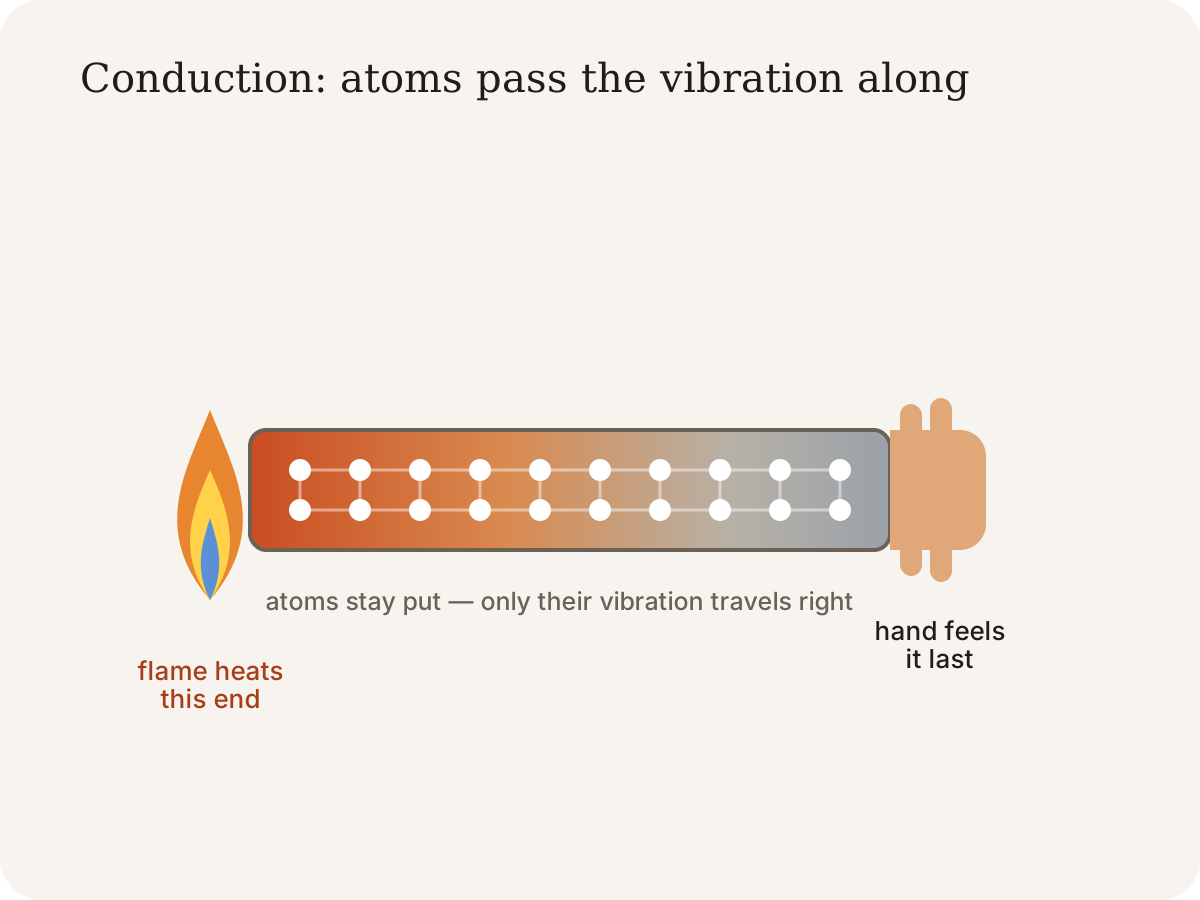
Conduction requires a solid material pathway. By removing that material entirely, the vacuum gap makes conduction across the wall physically impossible.

Heat conduction through a solid material

See it move

Race an open mug against the flask.

Both containers start at the same temperature in the same room. Improve the flask's insulation and watch the two cooling curves separate: the open mug (orange) keeps bleeding heat while the flask (green) barely moves.

Common misconception

A thermos does not generate warmth or cold — it removes pathways.

A common framing is that a thermos "keeps" warmth inside. A more accurate framing: the thermos removes every pathway through which thermal energy could travel. There is no mechanism pulling heat back or generating warmth. The design is entirely passive — a structure of deliberate absences.

This is why the same thermos works equally well for cold contents. Preventing heat from leaving and preventing heat from entering are the same physics applied in the same direction.

This also reframes insulation in general: good insulation is not about adding an opposing force against heat flow. It is about reducing conductance — minimising the rate at which energy can cross a boundary per degree of temperature difference. The thermos pursues this logic to its practical extreme.
Connect the physics

The thermos brings together ideas from three parts of the site.

Heat and Phase

Conduction, convection, and radiation are the three transfer modes covered in the Heat and Phase lesson. The thermos is the single object that addresses all three at once.

Materials

Glass is chosen for the walls because of its low thermal conductivity and ease of silvering. The material selection is inseparable from the function each layer performs.

Refrigerator

The refrigerator and the thermos both manage heat flow between a controlled interior and the room — one using passive structure, the other using active mechanical work.

Quick check

Four questions on the thermos.