Step 1
Pressure exists in the supply
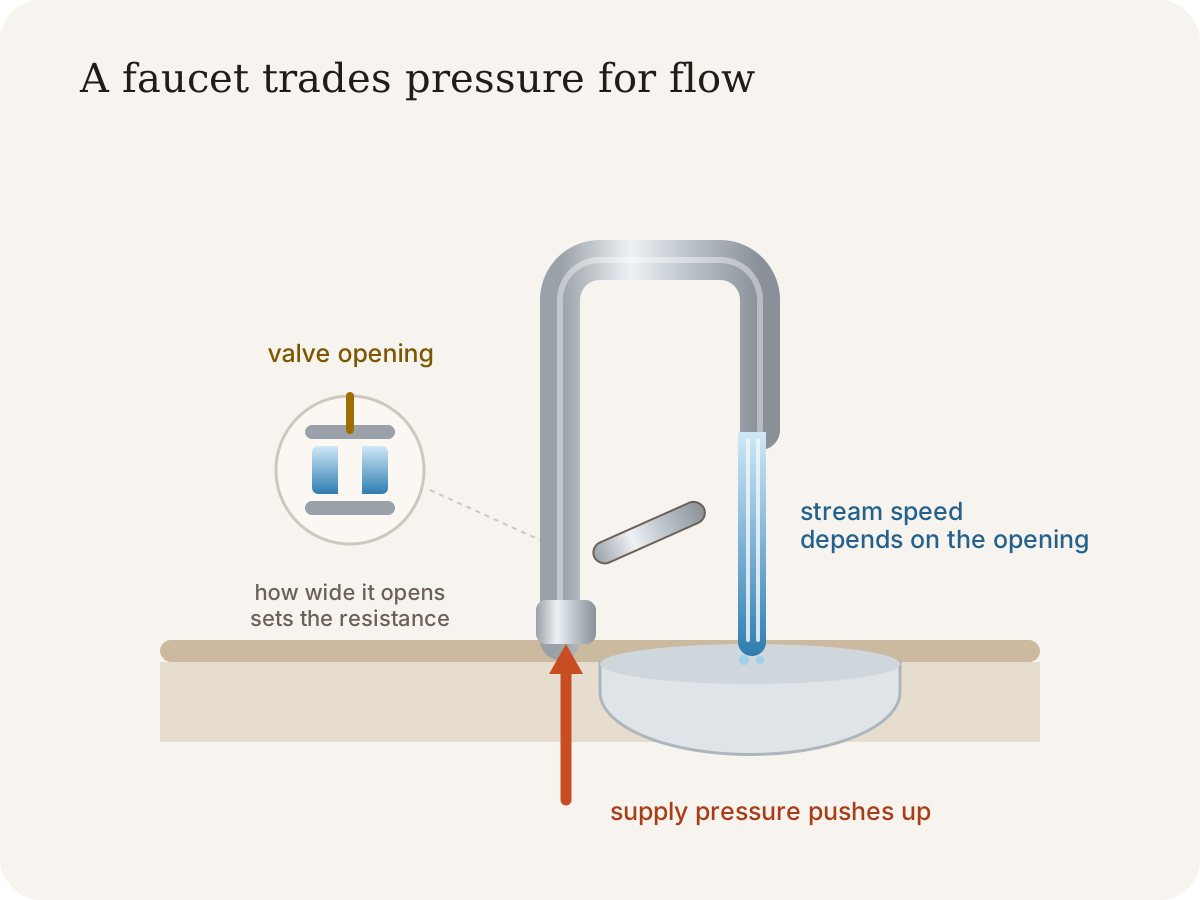
The water mains are maintained at elevated pressure. This pressure difference between the supply and the open tap is what drives flow — the faucet does not create pressure, it releases it.
Explore object
A faucet converts a pressure difference into controlled flow. It brings together pressure gradients, resistance, and fluid geometry — in the most ordinary of kitchen objects.
What to notice
Step 1
The water mains are maintained at elevated pressure. This pressure difference between the supply and the open tap is what drives flow — the faucet does not create pressure, it releases it.
Step 2
The faucet valve changes the geometry of the flow path. A nearly closed valve creates high resistance; a fully open valve creates low resistance. Flow rate responds to both the resistance and the driving pressure difference.
Step 3
As water exits through the nozzle, its speed and shape reflect the continuity of flow: where the path narrows, velocity increases. The visible jet shape encodes pressure, velocity, and gravity in real time.
The physics
Flow and resistance
Flow in a pipe follows the same logic as current in an electrical circuit: a driving pressure difference, a resistance to flow, and a resulting flow rate. Increasing the driving pressure or decreasing the resistance both increase flow — the relationship is structural, not coincidental.
Laminar and turbulent
The jet reveals the flow regime. At low flow, water moves in smooth, parallel layers — laminar flow. At high flow, it breaks into a chaotic, aerated pattern — turbulent flow. This transition is visible and immediate.
See it move
At low flow the stream is laminar — a glassy column you could read through. Keep opening the valve and, past a critical Reynolds number, it shivers, breaks into strands, and starts to splash. The readout tracks the Reynolds number live.
Common misconception
Many learners assume the faucet generates water movement. In fact, pressure is created and maintained upstream by pumps, water towers, or the column height of the supply network. The valve is only a restriction — turning it controls how much the pre-existing pressure difference can drive flow.
The practical consequence is that pressure at a faucet reflects conditions elsewhere in the system — reduced flow when a neighbour runs their tap, weaker jets on upper floors, a stronger stream after a new pump is installed. The faucet reads the system; it does not define it.
Connect the physics
The Sound and Flow lesson covers the pressure–resistance–flow relationship in full and includes a faucet valve simulation you can adjust directly.
Voltage, resistance, and current in a circuit are the direct analogues of pressure difference, flow resistance, and flow rate. The same structural logic governs both.
Pipe and valve material choices determine corrosion resistance, friction, and thermal response — all of which affect long-term flow behavior and system reliability.
Quick check